

Home › Dental Problems › Tooth Decay / Cavities
Tooth Decay / Cavities
Cavities can progress from early enamel damage to pain, infection and tooth loss. Early diagnosis can often keep treatment simpler.
Early Signs & Symptoms
White, brown or black spotsVisible colour changes may be an early or established sign of decay.
Food getting stuckA cavity or broken contact can trap food between teeth.
Tooth sensitivityCold, sweet or hot foods may trigger discomfort.
Pain while chewingPressure can irritate a deeper cavity or inflamed pulp.
ToothacheSpontaneous pain can suggest deeper decay or infection.
What Causes Cavities?
- Bacteria produce acids that attack enamel.
- Frequent sugary, sticky or starchy foods.
- Poor brushing and flossing.
- Dry mouth and reduced saliva.
- Deep grooves, exposed roots or previous dental work.
How We Diagnose It
- Clinical examination of the tooth surface.
- Checking areas where food traps or tenderness occur.
- Dental X-rays when clinically indicated.
- Assessing whether the nerve is involved.
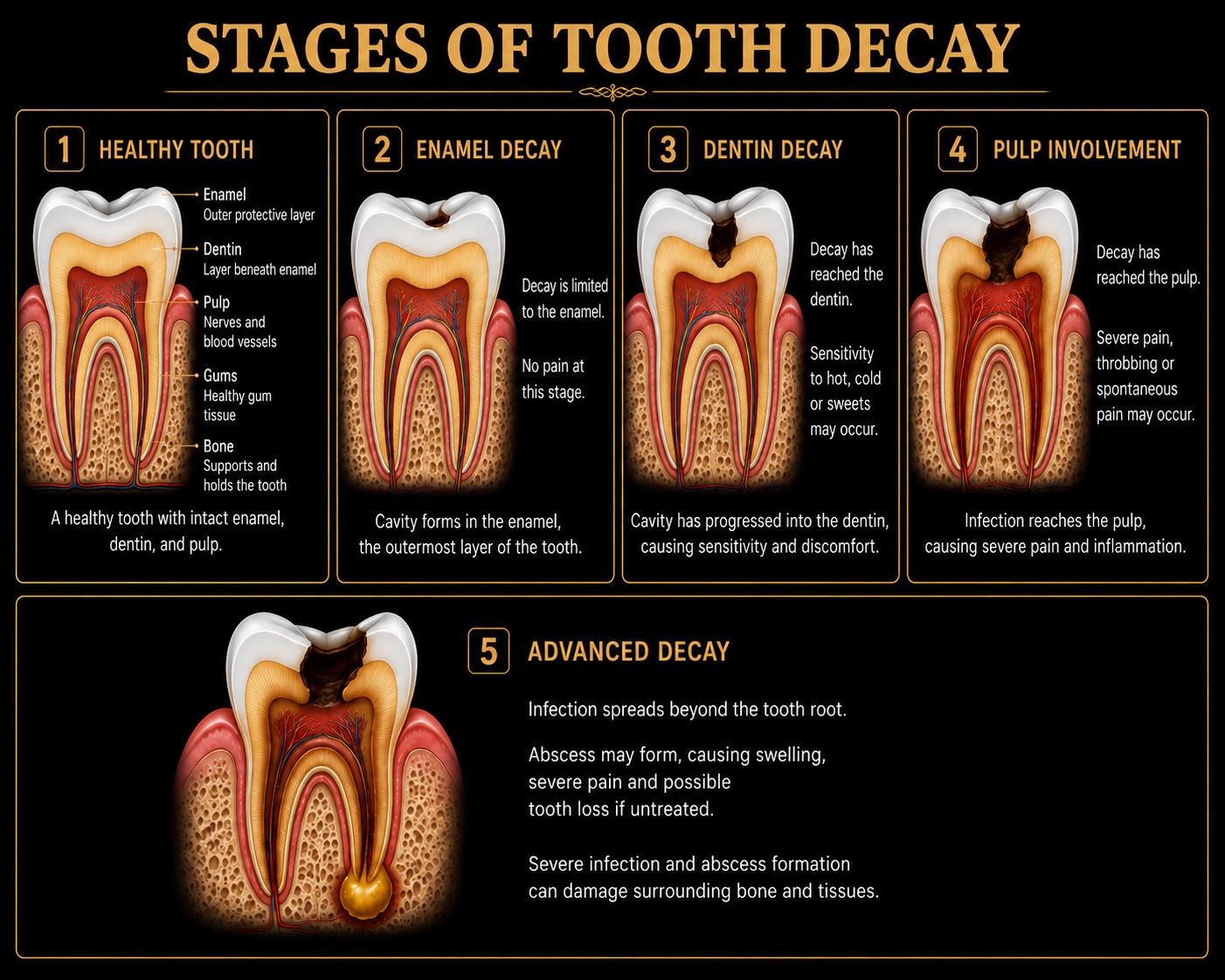
Stages of Tooth Decay
Treatment According to Stage
Early DecayPreventive care, fluoride measures and oral-hygiene guidance where appropriate.
Small CavityTooth-coloured filling to restore the tooth.
Deep CavityRestoration or pulp-related treatment depending on findings.
Pulp InvolvementRoot canal treatment may be required to save the tooth.
Severely Damaged ToothCrown or another restorative option may be considered.
Can a Cavity Heal Without Treatment?
Very early mineral loss can sometimes be managed preventively, but an established cavity does not rebuild itself. Delaying care can allow decay to progress toward the nerve.
How to Prevent Tooth Decay
- Brush twice daily with fluoride toothpaste.
- Clean between teeth every day.
- Limit frequent sugary or sticky snacks.
- Have regular dental examinations based on your needs.
- Seek care early when sensitivity or food trapping starts.
Frequently Asked Questions
Does tooth decay always cause pain?
Not necessarily. Early decay can be painless, which is why examination is useful before symptoms become severe.
Is a filling treatment painful?
Comfort measures and local anaesthesia are used when required. The exact experience depends on cavity depth and tooth condition.
When can decay need root canal treatment?
If decay reaches or significantly inflames the dental pulp, root canal treatment may be recommended after clinical assessment.