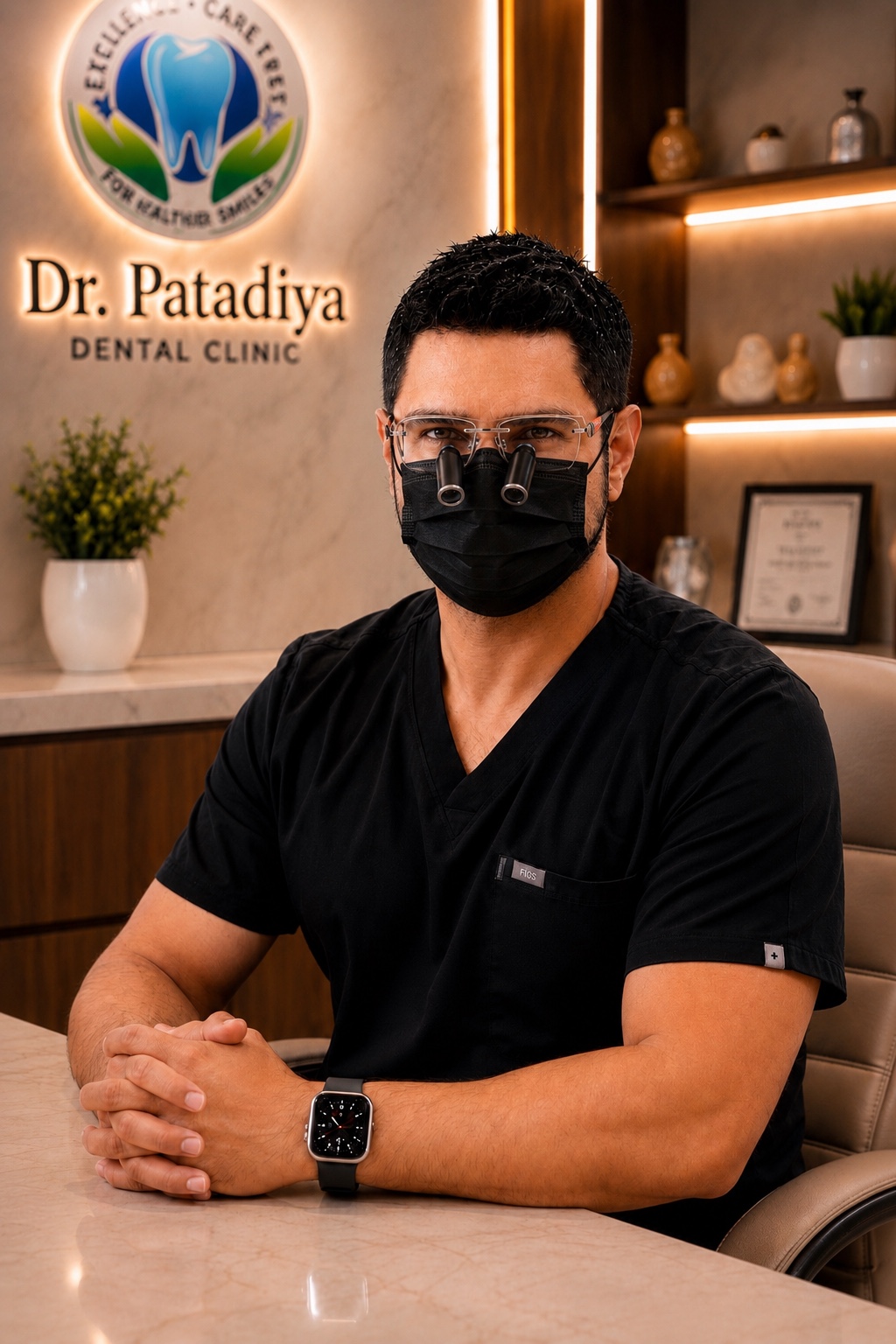
Zirconia Crowns
Strong, tooth-coloured restorations commonly selected where durability and aesthetics are both important.
 DR. PATADIYA DENTAL CLINICGANDHINAGAR · GUJARATBook Appointment


Advanced restorative dentistry for damaged, weakened and missing teeth using carefully selected ceramic, zirconia, E-max and bridge options.
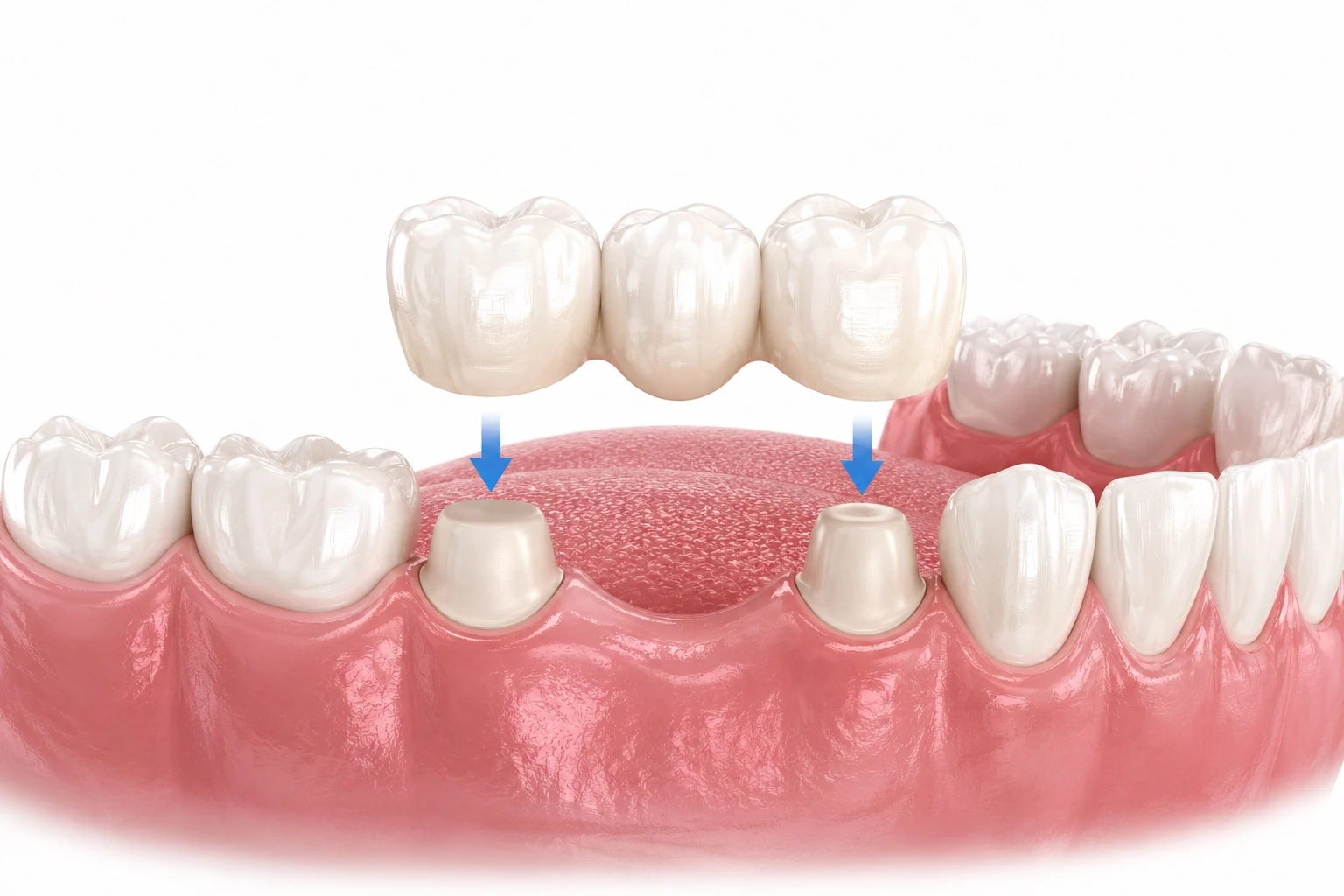
A crown or bridge should be selected according to the tooth, bite, available space, gum health, smile zone and long-term restorative requirements. The material is important—but the treatment plan comes first.
Strong, tooth-coloured restorations commonly selected where durability and aesthetics are both important.
Highly aesthetic ceramic restorations often considered for visible teeth and selected cosmetic cases where translucency matters.
Metal-free ceramic options designed to blend with natural teeth when clinically suitable.
Porcelain-fused-to-metal crowns combine a metal substructure with a tooth-coloured porcelain surface.
In addition to specialist oral and maxillofacial expertise, Dr. M. M. Patadiya provides comprehensive advanced dentistry including dental implants, modern crowns and bridges, E-max and zirconia restorations, veneers, cosmetic dentistry, clear aligners and complex restorative treatment planning.
Dr. (Mrs.) H. M. Patadiya focuses strongly on smile makeovers, veneers, crowns, bridges and aesthetic restorative dentistry, with special attention to natural-looking shape, shade and smile harmony.
Assessment of the tooth, gums, bite, surrounding teeth and overall restorative requirements.
Zirconia, E-max, ceramic or PFM is selected according to clinical and aesthetic needs.
Tooth preparation, impressions or digital records and shade selection as appropriate.
Fit, contacts, bite and appearance are evaluated before finalization and follow-up.
Neither material is automatically best for every tooth. Zirconia may be preferred where strength is a major priority, while E-max can be valuable in selected aesthetic situations. Tooth position, bite and restorative space matter.
Both can be appropriate. An implant may avoid preparing healthy neighbouring teeth, while a conventional bridge may be useful in selected clinical situations. The correct choice depends on the individual case.
Modern ceramic and zirconia restorations can be designed to complement surrounding teeth. Final appearance depends on the tooth, preparation, laboratory work, shade selection and surrounding tissues.
Longevity varies according to oral hygiene, bite, habits, gum health, underlying tooth condition and maintenance. No restoration should be described as lasting forever.
At DR. PATADIYA DENTAL CLINIC, crown and bridge treatment begins with a careful assessment of tooth structure, gum health, bite, functional requirements and aesthetic expectations. The goal is not simply to cover or replace a tooth, but to create a restoration that fits comfortably and functions harmoniously with the rest of your mouth.
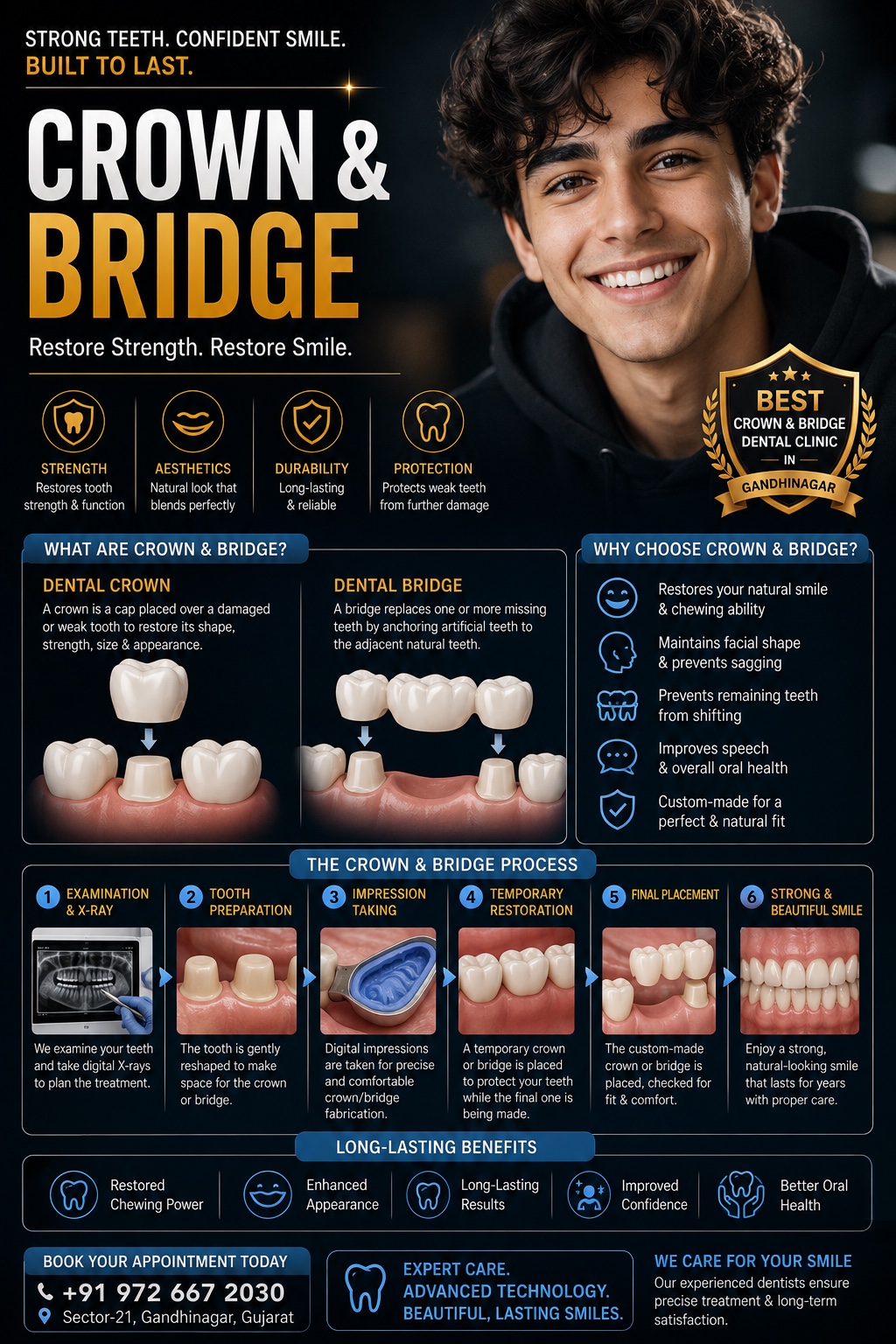
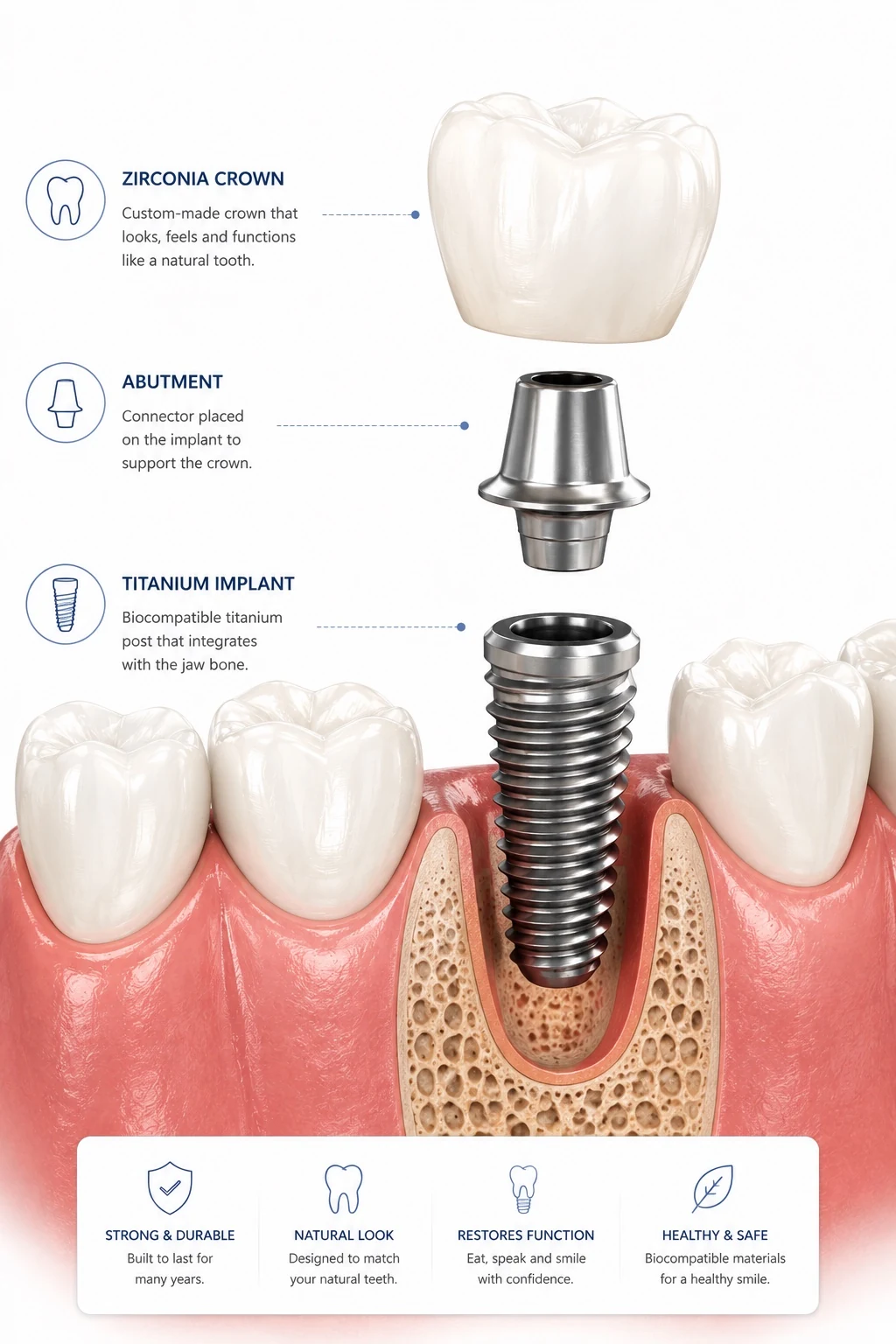
A dental crown is a custom-made restoration that covers a prepared natural tooth or is attached to a dental implant. It may be recommended when a tooth is extensively damaged, weakened, heavily restored, root-canal treated or requires aesthetic improvement.
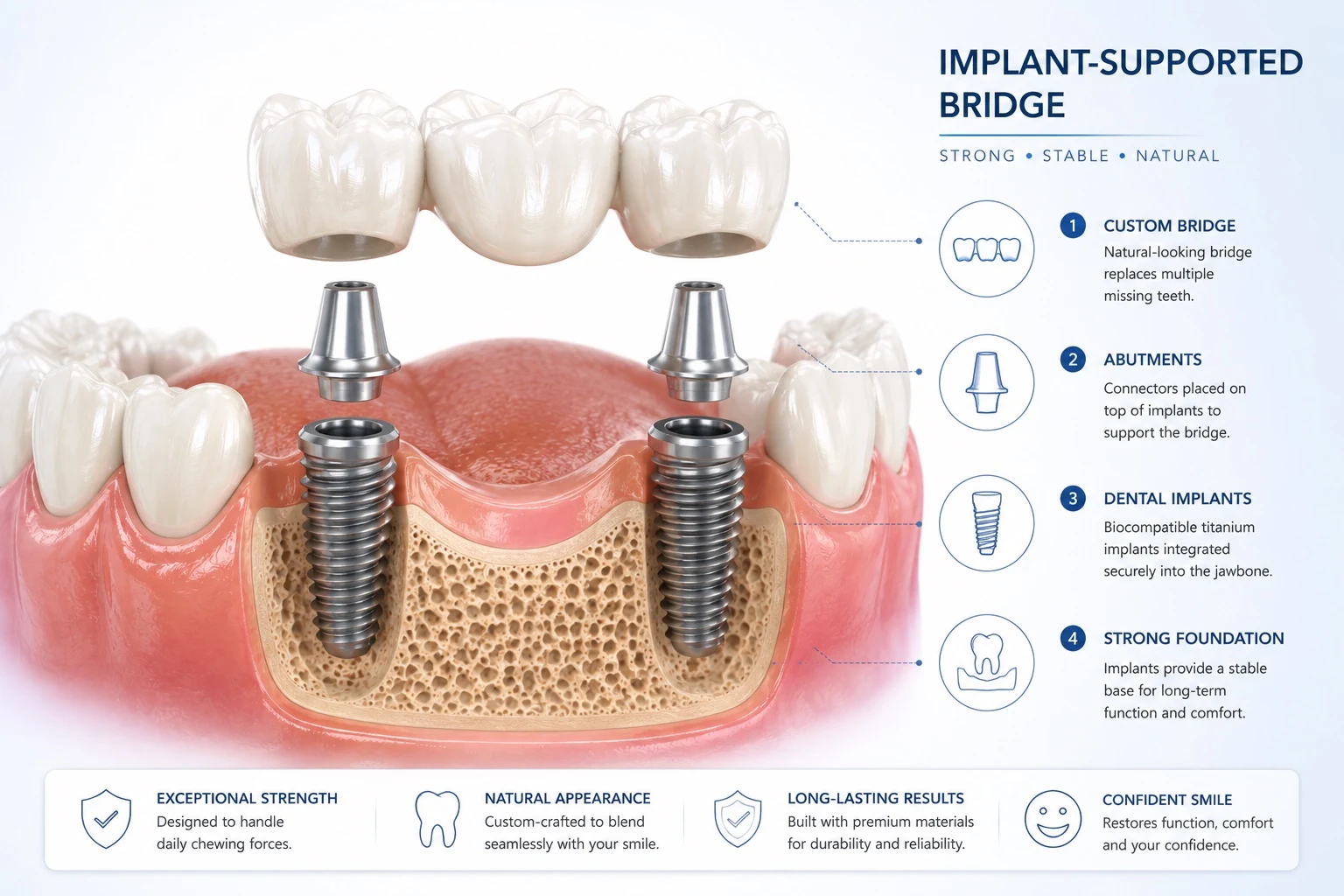
A dental bridge replaces one or more missing teeth. Depending on the clinical situation, it may be supported by prepared natural teeth or by dental implants. The appropriate option depends on the health of the supporting teeth, available bone, bite and overall treatment plan.
Extensive experience in comprehensive dental, restorative, implant and specialist care.
A clinic-provided milestone representing patients treated over the years.
Conventional and implant-supported options can be assessed within one comprehensive treatment plan.
Material and treatment choices are based on your clinical needs, bite, aesthetics and long-term maintenance.
The exact sequence varies by case, but treatment generally involves preparing the tooth, recording its shape and bite, fabricating the restoration and securely placing the final crown after checking fit and occlusion.
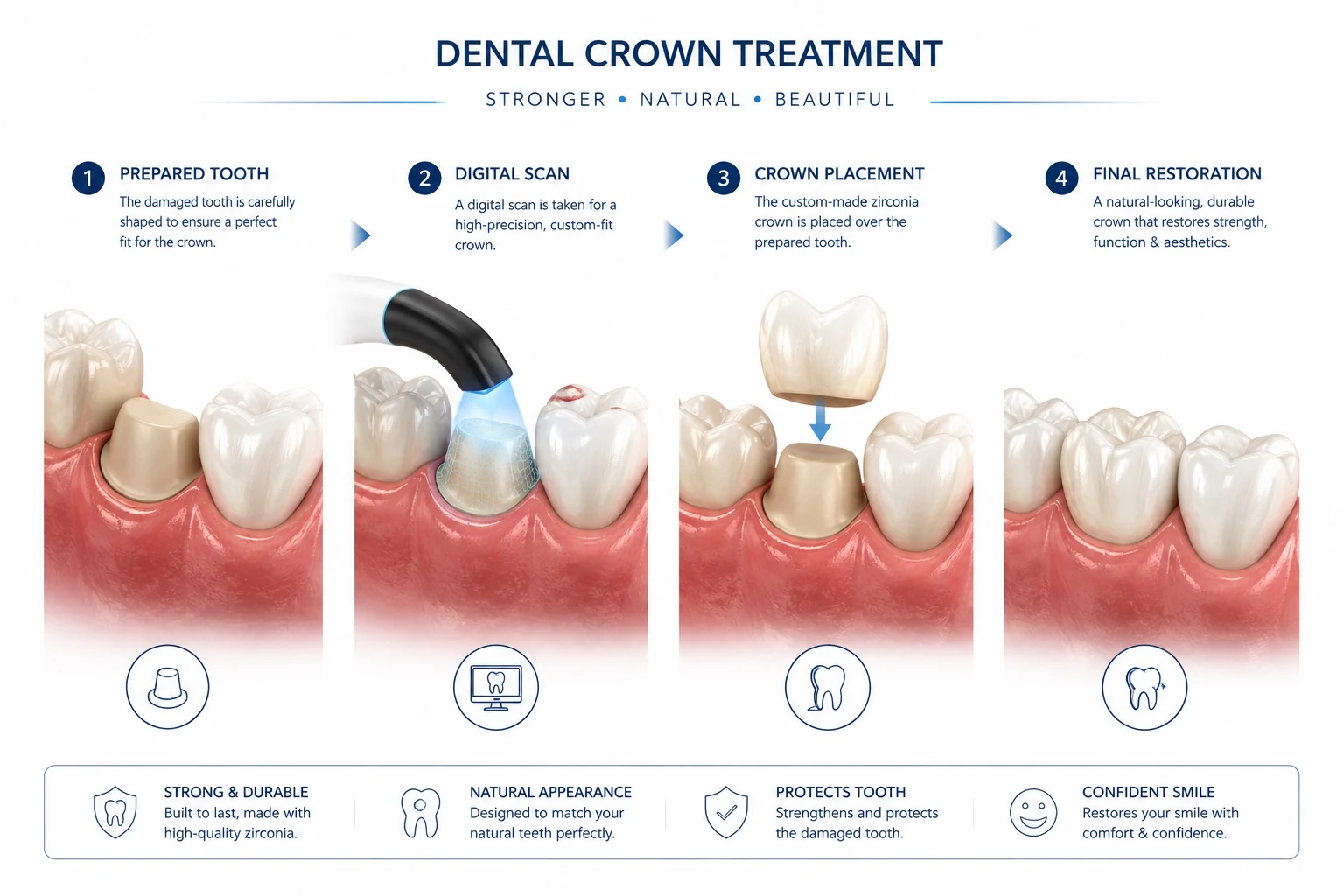
The tooth, gums and bite are examined. Damaged or unsupported tooth structure is managed and the tooth is prepared for the planned restoration.
Measurements, impressions or a digital scan may be taken along with shade and bite information for a custom fit.
The crown is fabricated in an appropriate restorative material according to clinical and aesthetic requirements.
Fit, contacts, bite and appearance are checked before the restoration is bonded or cemented as appropriate.
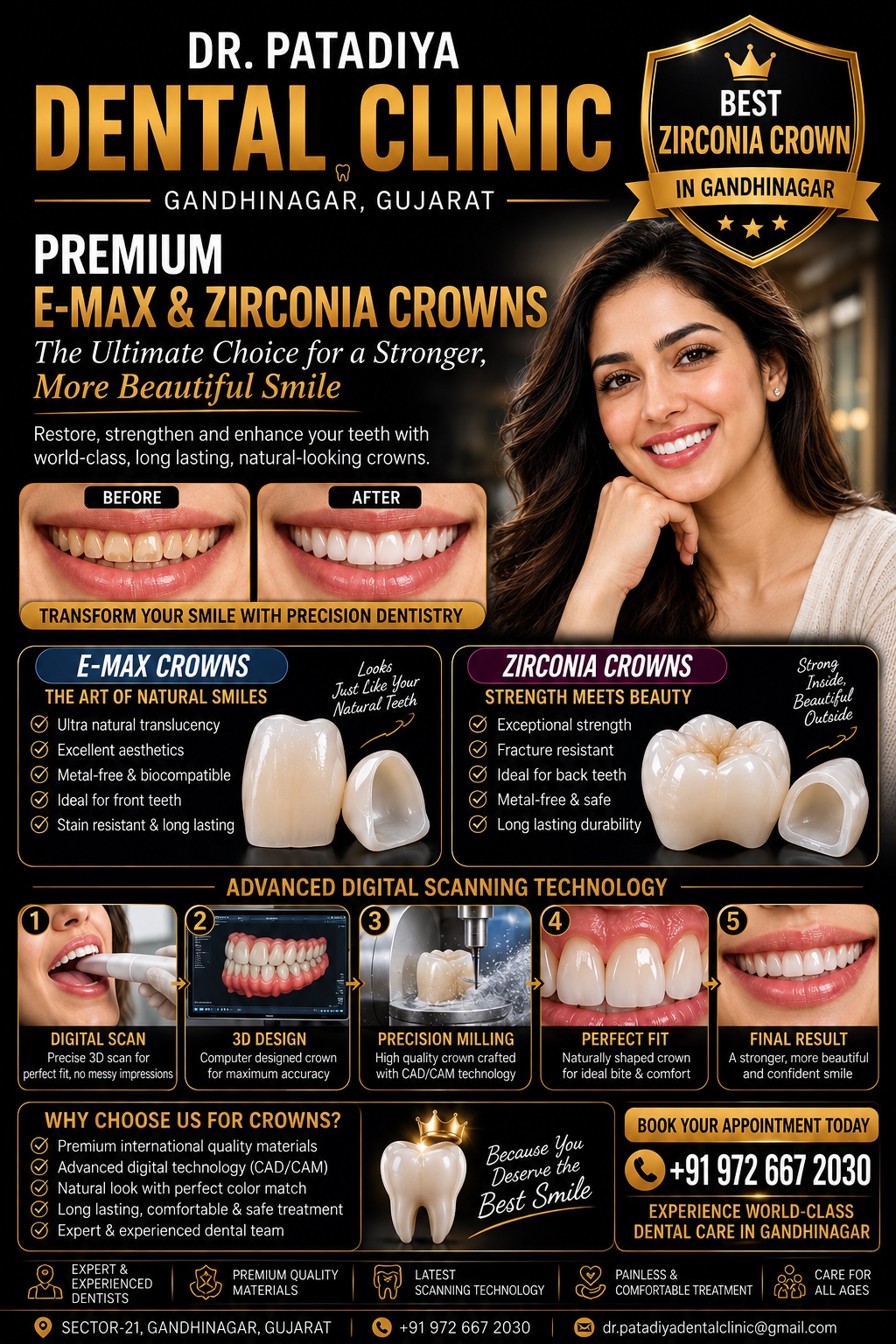
No single crown material is best for every tooth. Location in the mouth, remaining tooth structure, bite forces, available space, aesthetic priorities and opposing teeth all influence the final choice.
High-strength ceramic restorations commonly selected where durability is important. Modern zirconia is available in different formulations and translucencies for different clinical situations.
Metal-free ceramic restorations that can provide excellent aesthetics, particularly when natural translucency and colour matching are priorities.
Restorations with a metal substructure covered by tooth-coloured porcelain. They remain a clinically established option in selected situations.
Missing teeth can affect chewing, speech, appearance and bite stability. A fixed dental bridge may replace one or more teeth when the supporting teeth and surrounding tissues are suitable.
In a conventional bridge, crowns are placed on suitable teeth adjacent to the gap and connected to a replacement tooth. Because the supporting teeth require preparation, their condition and long-term prognosis must be carefully assessed before treatment.
Other bridge designs exist, including cantilever and resin-bonded bridges, but they are used only in appropriately selected cases. Their suitability depends heavily on tooth position, bite and available support.
When a tooth is missing, a dental implant may be considered as an alternative to preparing neighbouring teeth for a conventional bridge. Suitability depends on bone, gum health, medical history, bite and other clinical factors.
A crown may be considered when sufficient healthy tooth structure and root support remain, but the tooth requires reinforcement, coverage or aesthetic restoration.
A conventional bridge may be considered when suitable adjacent teeth can provide dependable support and the overall treatment plan favours this approach.
An implant-supported crown may be considered when preserving adjacent teeth is desirable and the bone, gum and general health conditions are suitable for implant treatment.
Patients often search for the best dentist in Gandhinagar when they need a long-term solution rather than a single procedure. At DR. PATADIYA DENTAL CLINIC, restorative, cosmetic, implant and surgical considerations can be evaluated as part of one comprehensive plan.
B.D.S., M.D.S. · Oral & Maxillofacial Surgeon
Experienced specialist providing comprehensive dental and oral surgical care, including minor and major oral surgical procedures.
B.D.S. · Cosmetic Dental Surgeon
Focused on cosmetic, restorative and smile-enhancing dental treatments with attention to function and aesthetics.
If you are looking for the best dental clinic in Gandhinagar for comprehensive dental care, choose a team that evaluates the entire mouth rather than treating one tooth in isolation.
Dental Implants · Root Canal Treatment · Clear Aligners · Crowns & Bridges · Cosmetic Dentistry · Wisdom Tooth Treatment · Braces · Smile Makeovers · Full Mouth Rehabilitation · Gum Treatment · Oral & Maxillofacial Surgery
There is no fixed lifespan. Longevity varies with material, tooth and gum condition, bite forces, oral hygiene, diet, habits such as grinding and regular dental maintenance.
No. Zirconia is an excellent option in many situations, but the most appropriate material depends on the tooth position, bite, available thickness, opposing teeth and aesthetic requirements.
With a conventional fixed bridge, supporting teeth are usually prepared to receive crowns. Implant-supported options may avoid preparing neighbouring teeth when implant treatment is suitable.
Often, especially for back teeth with substantial loss of tooth structure, a crown or other cuspal-coverage restoration may be recommended. The decision depends on the remaining tooth structure and individual clinical situation.
A clinical examination and appropriate diagnostic records are required. The decision depends on the adjacent teeth, bone and gum condition, bite, medical history, treatment preferences, time and other factors.
Clinical note: Images on this page are educational illustrations and not patient before-and-after photographs. Treatment recommendations, materials, procedures, longevity and results vary according to individual clinical conditions. *23+ Years of Overall Dental Field Experience and 100,000+ patients treated are clinic-provided practice milestones.
Book a clinical consultation for an individualized assessment and treatment plan.
DR. M. M. PATADIYA, B.D.S., M.D.S. (Oral & Maxillofacial Surgery), provides comprehensive dental and restorative treatment planning in addition to his specialist surgical practice. His clinical work includes crowns and bridges, implant-supported restorations, dental implants, complex restorative cases and treatment planning where bite, supporting teeth, bone and long-term function are considered together.