Natural Translucency
Lithium-disilicate ceramic can provide a tooth-like optical appearance in appropriately selected cases.
 DR. PATADIYA DENTAL CLINICGANDHINAGAR · GUJARATBook Appointment


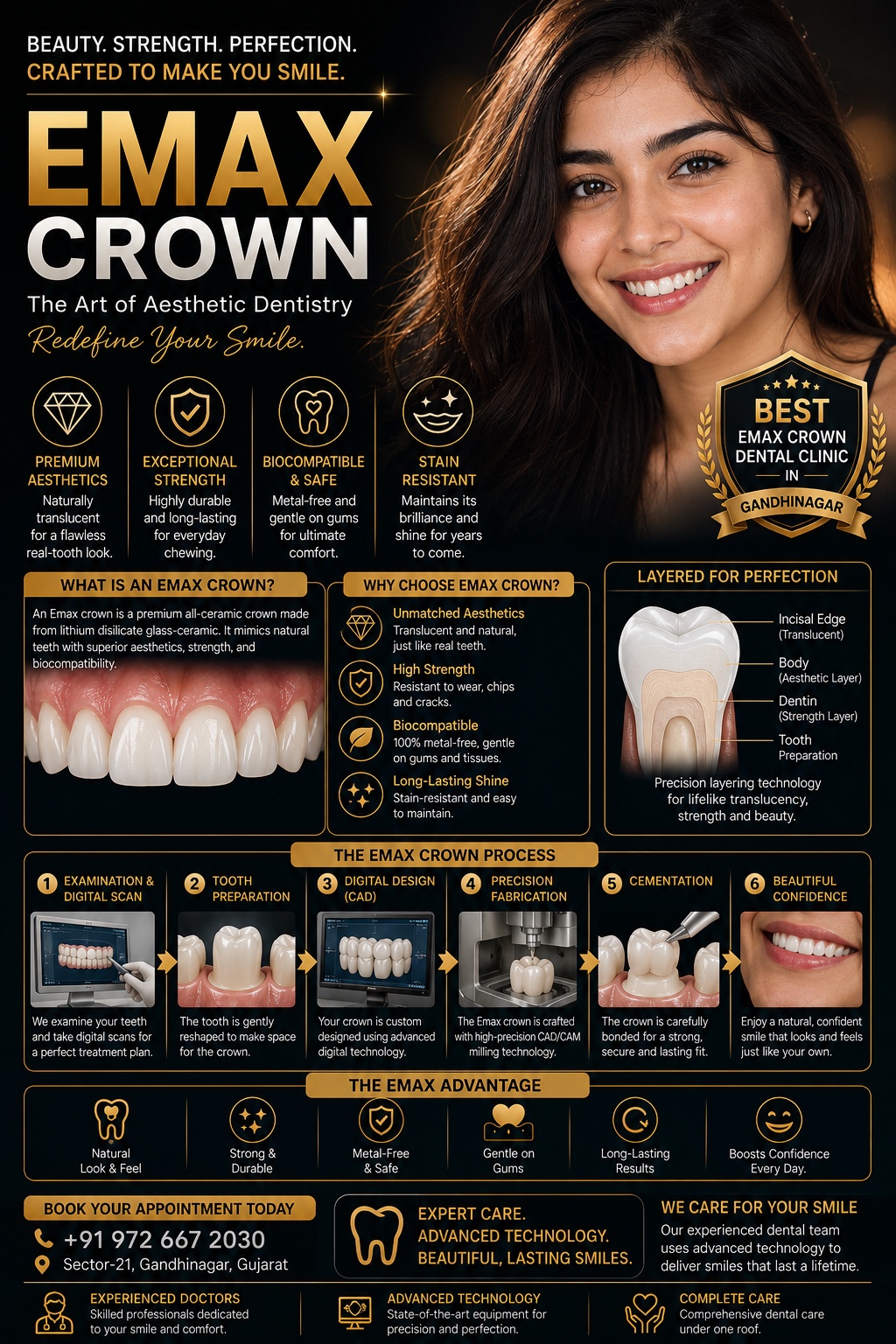
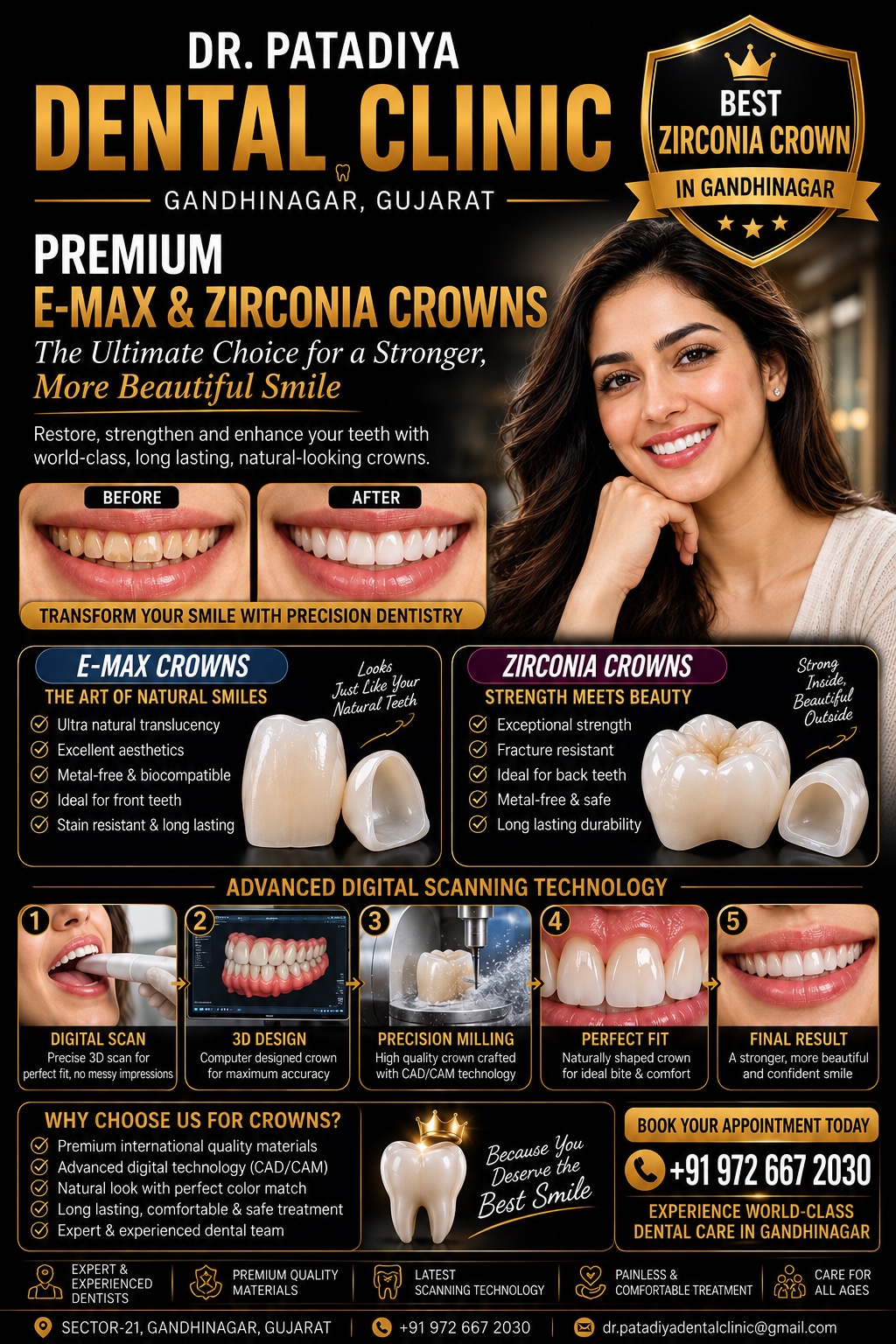
High-aesthetic lithium-disilicate ceramic restorations used in selected teeth where natural translucency, function and conservative restorative planning are important.
E.max® is a lithium-disilicate ceramic system widely used for aesthetic dental restorations. Depending on the clinical situation, it may be considered for selected crowns, veneers, inlays or onlays where appearance and function both matter.
Patients searching for the best dentist for E.max crowns in Gandhinagar, best dental clinic for ceramic crowns in Gandhinagar or best cosmetic dentist in Gandhinagar for natural-looking crowns should understand that material selection must be individualized. E.max®, zirconia and porcelain-fused-to-metal restorations each have different indications.
Lithium-disilicate ceramic can provide a tooth-like optical appearance in appropriately selected cases.
E.max® restorations do not contain a metal coping, which can be advantageous in selected aesthetic areas.
Depending on the preparation and restoration type, adhesive bonding can form an important part of treatment.
It is commonly considered in visible areas where colour, translucency and surface character are important.
Some posterior teeth may also be suitable depending on remaining tooth structure, restoration design and bite forces.
The final restoration is designed to harmonise with surrounding teeth whenever clinically achievable.
There is no universally “best” crown material. E.max® is often chosen for high-aesthetic situations, while zirconia may be preferred where greater material strength or different restorative requirements are important. Tooth position, remaining tooth structure, occlusion, parafunctional habits, aesthetics and restoration thickness all influence the decision.
We evaluate the tooth, existing restorations, gum health, bite and aesthetic requirements.
The tooth is prepared according to the planned restoration while preserving as much healthy structure as clinically possible.
Accurate records are used to design the final restoration.
Colour, translucency and tooth form are planned according to surrounding teeth and smile requirements.
Fit, contacts, bite and appearance are evaluated before definitive bonding or cementation.
Regular dental reviews, oral hygiene and protection from excessive forces help support long-term restoration health.
Depending on your case, an E.max® crown may not be the only option. We may also discuss zirconia or other crowns and bridges, dental veneers, or treatment of the underlying tooth such as root canal treatment before the final restoration.
They are different ceramic materials with different properties. Zirconia generally has higher flexural strength, while lithium disilicate is often selected for its aesthetic characteristics. The appropriate material depends on the clinical situation.
Yes, it is commonly considered for selected anterior restorations because of its aesthetic potential. Suitability still depends on tooth structure, bite and preparation design.
Sometimes, but the choice of final restoration depends on how much tooth structure remains, tooth position, bite forces and other clinical factors.
Longevity varies with tooth condition, preparation, bite, material thickness, bonding, oral hygiene, habits and maintenance. No crown should be presented as permanent for life.
Images are educational illustrations. E.max® is a trademark used to identify a specific lithium-disilicate ceramic system. Material selection, preparation, bonding approach, longevity and final aesthetic outcome vary by individual clinical situation. Clinical examination is required before treatment planning.