Severe or Lingering Toothache
Persistent, spontaneous or lingering pain may indicate pulpal inflammation or infection.
 DR. PATADIYA DENTAL CLINICGANDHINAGAR · GUJARATBook Appointment


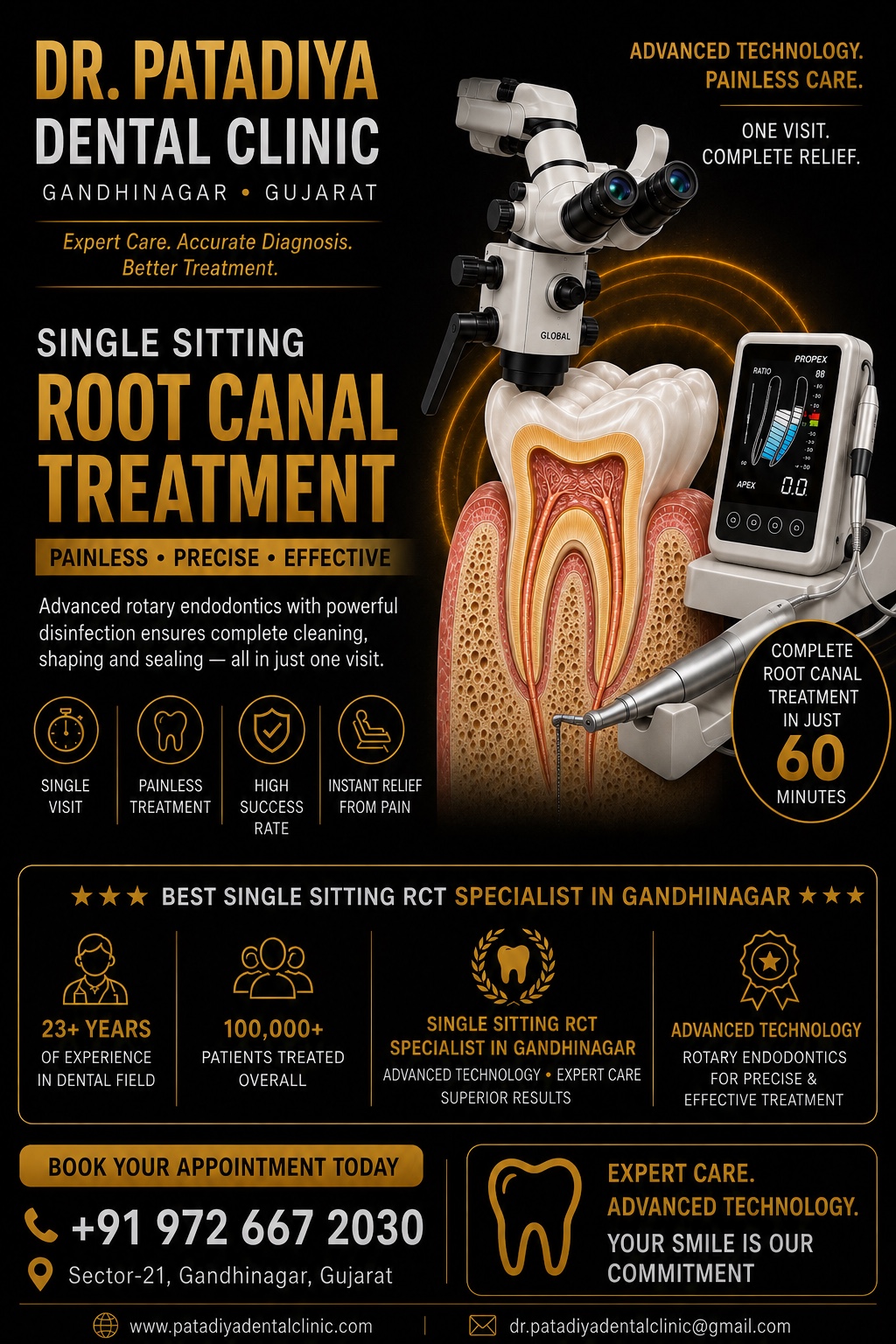
Modern root canal treatment focused on diagnosis, comfort, infection control and preserving your natural tooth whenever clinically possible.
Root canal treatment is used when the pulp inside a tooth becomes irreversibly inflamed or infected. The objective is to clean and disinfect the root canal system, seal it appropriately and restore the tooth so it can continue functioning.
Persistent, spontaneous or lingering pain may indicate pulpal inflammation or infection.
Decay that reaches or closely approaches the pulp can sometimes require root canal treatment.
Cracks or injuries may involve the pulp and require endodontic treatment depending on restorability.
Selected infections arising from the tooth may require root canal treatment, drainage or other appropriate management.
Many root canal treatments can be completed in one visit when the tooth, infection status and clinical circumstances are suitable. Other teeth require more than one appointment for safe and appropriate care.
The clinic emphasizes proper diagnosis, effective local anaesthesia, modern instrumentation, disinfection, sealing and restorative planning rather than making unrealistic “zero pain” guarantees.
Dr. M. M. Patadiya provides comprehensive advanced dentistry in addition to his specialist background, including dental implants, crowns and bridges, E-max and zirconia restorations, veneers, cosmetic dentistry, clear aligners and restorative treatment planning.
Dr. (Mrs.) H. M. Patadiya contributes strongly to the restorative and cosmetic phase after root canal treatment, including crowns, bridges and aesthetic planning where required.
Clinical examination and appropriate imaging help determine whether root canal treatment is indicated.
The tooth is anaesthetized and the root canal system is accessed.
The canals are shaped, cleaned and disinfected using modern endodontic techniques.
The canal system is filled and the tooth is restored appropriately for function and protection.
A root-canal-treated tooth may need a crown or other protective restoration depending on the amount of remaining tooth structure, tooth position and bite forces. Proper restoration is an important part of long-term tooth survival.
Local anaesthesia is used to make the procedure comfortable. Some tenderness afterwards can occur and varies between patients and teeth.
No. Single-sitting RCT is appropriate only in selected cases. The condition of the tooth, infection and other clinical findings determine the number of visits.
Many back teeth and structurally weakened teeth benefit from cuspal coverage or a crown, but the final restoration depends on the remaining tooth structure and bite.
That is the main purpose of endodontic treatment when the tooth is otherwise restorable. Prognosis depends on the tooth and surrounding tissues.
A severe toothache does not always mean that the tooth must be removed. When the dental pulp becomes irreversibly inflamed or infected, root canal treatment may allow the natural tooth to be retained.
At DR. PATADIYA DENTAL CLINIC, Sector-21, Gandhinagar, each tooth is assessed individually. Treatment planning considers symptoms, clinical examination, appropriate dental radiographs, remaining tooth structure, periodontal condition and whether the tooth can be predictably restored.
Inside every natural tooth is a pulp space containing nerves, blood vessels and connective tissue. Deep decay, cracks, trauma or other damage can cause this tissue to become inflamed or infected. Root canal treatment involves accessing the internal canal system, carefully cleaning and shaping it, disinfecting it and sealing it with an appropriate root-filling material. The tooth is then restored to protect its remaining structure and return it to function.
Decay extending close to or into the pulp can produce spontaneous pain, lingering sensitivity or inflammation.
Infection within the root-canal system may cause pain, swelling, tenderness or changes visible on a dental radiograph.
Some injured, fractured or heavily restored teeth develop pulpal disease and may require endodontic treatment.
In suitable cases, cleaning, shaping, disinfection and obturation of the root-canal system may be completed in a single appointment. This is commonly referred to as single-sitting RCT.
Single-visit treatment is not automatically appropriate for every tooth. The decision depends on diagnosis, anatomy, infection, symptoms, procedural findings, restorability and the clinician's assessment. Some cases are better managed over more than one visit.
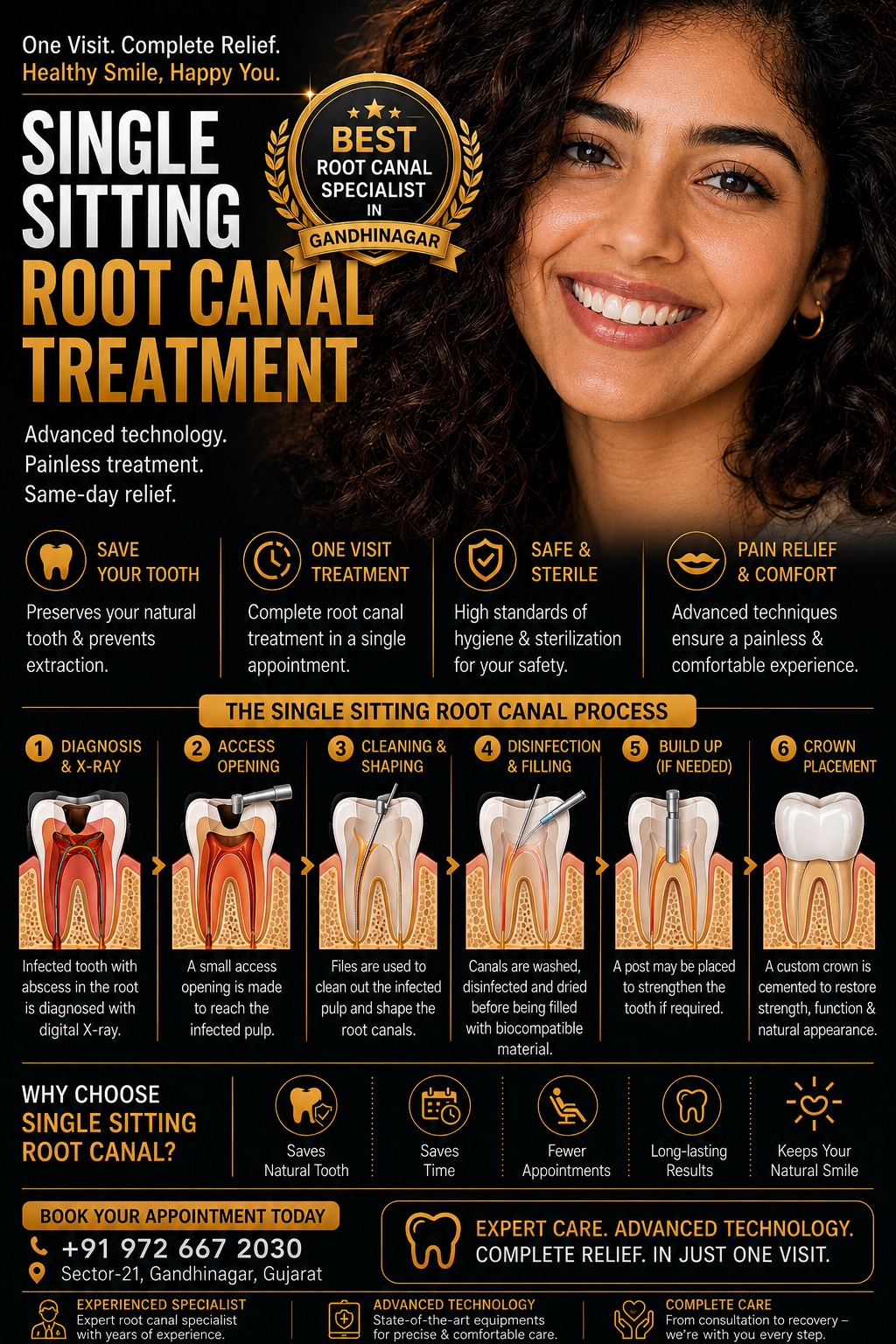
The educational illustration below shows the general sequence of treatment—from an infected pulp and access opening through cleaning, disinfection, sealing and final restoration. It is intended to help patients understand the procedure; actual tooth anatomy and treatment steps vary between cases.
The tooth is examined and appropriate diagnostic records are reviewed. Local anaesthesia is used for patient comfort.
The internal canal system is accessed and carefully cleaned and shaped using appropriate endodontic instruments and irrigation protocols.
After appropriate preparation, the canal system is filled and sealed. The tooth is then restored according to the remaining tooth structure.
Root canal treatment is performed under local anaesthesia. Modern techniques are intended to keep the procedure comfortable. A tooth may remain tender for a period after treatment, particularly if it was painful or infected beforehand. Expected aftercare and when to contact the clinic are discussed according to the individual case.
Completing the root canal is only one part of saving a tooth. The tooth must also be appropriately restored. Depending on its location and the amount of remaining healthy tooth structure, this may involve a bonded restoration, core build-up, onlay or dental crown. Back teeth and extensively weakened teeth commonly require additional protection against fracture.
When a tooth is restorable and has an appropriate prognosis, preserving the natural tooth may be preferable to extraction. However, teeth with severe structural damage, certain fractures, inadequate periodontal support or other unfavourable conditions may not be suitable for root canal treatment. If extraction is required, replacement options can include a dental implant, bridge or other prosthetic treatment depending on the case.
Patients searching for the best root canal specialist in Gandhinagar, best RCT specialist in Gandhinagar, best dentist in Gandhinagar for root canal treatment or the best dental clinic for root canal treatment in Gandhinagar should consider accurate diagnosis, appropriate case selection, careful technique, infection control and the quality of the final restoration—not simply whether treatment can be completed quickly.
Dental Education • Specialist Training • Clinical Practice
A clinic-reported milestone across comprehensive dental and specialist treatment.
Diagnosis, endodontic treatment and the final restorative requirement are considered together.
Good oral hygiene, appropriate restoration and regular dental review remain important after RCT. Avoiding excessive chewing on a heavily weakened or temporarily restored tooth may be advised until definitive restoration is completed. Long-term outcome varies with the original diagnosis, tooth anatomy, remaining tooth structure, restoration, periodontal health, oral hygiene and other patient-specific factors.
No. Single-sitting RCT can be appropriate for selected teeth, but some clinical situations require more than one appointment. The decision is made after examination and during treatment.
Not every root-treated tooth requires the same restoration. A crown or other protective restoration may be recommended when significant tooth structure has been lost or the tooth is at increased risk of fracture.
No. Root canal treatment is intended to preserve suitable teeth, but restorability, fractures, periodontal support and other factors can make extraction more appropriate in some cases.
There is no guaranteed lifespan. Long-term outcome depends on diagnosis, quality of treatment and restoration, remaining tooth structure, bite, periodontal health, oral hygiene and regular maintenance.
Persistent or recurrent problems require reassessment. Depending on the cause, options may include retreatment, another endodontic procedure, restorative treatment or extraction.
Arrange an examination at DR. PATADIYA DENTAL CLINIC, Sector-21, Gandhinagar to determine whether root canal treatment or another treatment is appropriate.
This page provides general educational information and does not replace a clinical examination or individualized diagnosis. Root canal treatment, single-sitting treatment, number of visits, restorability, need for a crown, healing and long-term outcome vary according to the individual tooth and patient. No treatment outcome or treatment duration can be guaranteed.
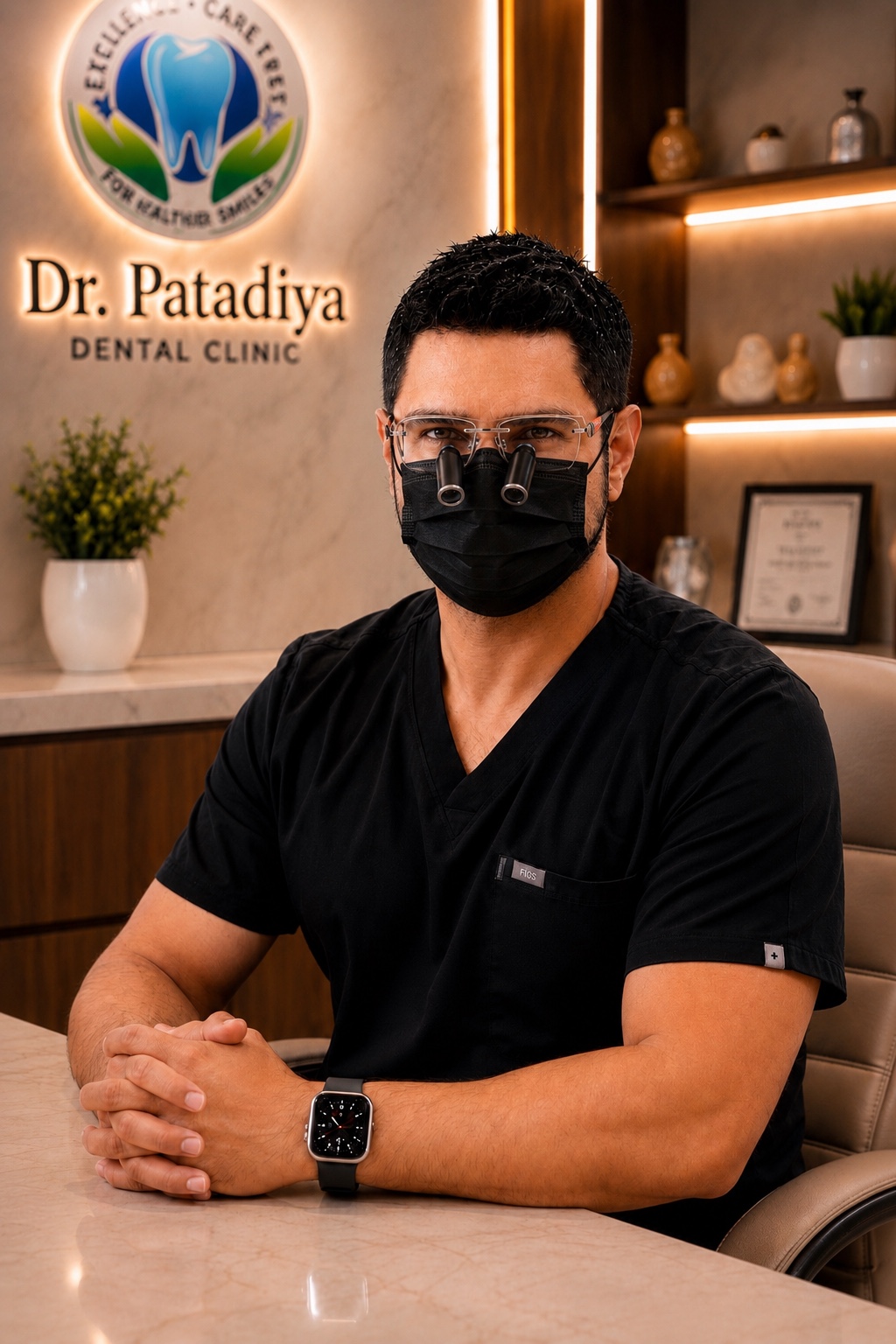
DR. M. M. PATADIYA provides comprehensive restorative care including Root Canal Treatment and suitable single-sitting RCT cases, with final restoration planned according to the condition of the individual tooth.
23+ Years of Overall Dental Field Experience
“The entire experience was seamless, efficient, and surprisingly painless. The professionalism and care made me feel comfortable throughout the procedure.”
“He did RCT for my wife. We had heard it was painful, but she did not feel pain during the treatment or afterwards.”
Excerpts from Google reviews supplied for this website. Individual experiences and outcomes vary.